
The 72-Hour Setup: What It Really Takes to Save a Tournament After a Bad Equipment Purchase
March 2024. Thursday. 3:47 p.m. I remember it because I was already reaching for my coat when the office phone rang. Almost let it go to voicemail. Good thing I didn't.
On the other end was Marcus, a venue owner who ran a sports-and-games facility about ninety minutes upstate. He didn't even start with hello. 'My pool table arrived broken,' he said. 'I have a tournament in seventy-two hours. What am I supposed to do now?'
In my role coordinating rush equipment jobs for entertainment venues, this wasn't a brand-new question. But the details were worse than I expected.
The call that started it
Ten days earlier, Marcus had ordered a table from an online liquidator. It was about 23% cheaper than the quote he'd gotten from a proper commercial supplier. The photos on the listing honestly didn't look that different from the premium tables he'd grown up playing on. So he saved the money and waited.
The table arrived in a truck with a lift-gate that was too small for the crate. The movers who unloaded it—and I use the term loosely—dropped one corner, dented the frame, and cracked a rail. They didn't say anything. They set it up, collected payment, and left. When Marcus had an inspector look at the table the next morning, the slate wasn't just unlevel; it was visibly twisted. That was the table he was supposed to host a regional tournament on.
'Can you fix it?' he asked. Fixing wasn't the problem. Trust was. If the structure of the table was already compromised, shimming it would only mask the damage. He needed a replacement. And the event wasn't three days out.
I told him the truth: we had one shot to do this right, and it wasn't going to be cheap.
What really matters in a tournament table
He didn't need just any table. He needed a table that could handle eight hours of competitive play without the rails softening or the playing surface changing as the day warmed up. We had an Aramith Fusion pool table in our regional inventory that was scheduled for a client who was willing to wait an extra week. I called the client first, confirmed the delay, and put Marcus at the front of the line.
Why the Fusion and not something from a warehouse clearance sale? Because every dollar of manufacturing goes into the parts you can't see. The slate is one single piece. The frame is built to keep it from flexing when players lean across it. The cushions are matched to a spec, not to whatever batch was cheapest that week. Marcus's old table looked similar in a photo. Side by side, the difference was embarrassing.
'What about the balls?' Marcus asked. That was the right question.
Over the years, one mistake keeps showing up on these orders: thinking all billiard balls are the same until you put them on a table that cost more than a used car. Polyester balls are fine for a home bar. For a tournament? You need the consistency of phenolic resin. For us, the default is the Aramith Continental pool balls. They're the ones we stock for league rooms and events where players notice the details. The surface stays uniform, the weight match is tight, and they don't develop those little flat spots after a season of hard breaks.
According to Aramith's own published technical specs (aramith.com), phenolic resin handles repeated impacts far better than polyester alternatives. I'm not going to claim a ball will never chip—hit anything hard enough at the wrong angle and something will give. But for commercial use, this is the class of product that holds up.
The 72-hour plan (and the people who pulled it off)
Here's the part that most people don't see. From the outside, a rush order looks like everyone just works faster. The reality is different: a three-day turnaround changes everything upstream. Which products are in stock. Which trucks run on which days. Which crew can physically get to the site. And what you'll pay to make all of it line up.
We had the table in stock, which was the only reason this had a chance. But getting it ninety minutes north, into Marcus's building, and set up on time meant finding movers who specialize in slate tables. Not furniture movers with a big dolly. Pool table movers. The ones who know how to take a heavy slate apart, move it through a narrow commercial doorway, and put it back together without cracking a seam.
We found a crew with an opening on Friday morning. Marcus paid $780 extra in rush freight and scheduling fees to get the Fusion table delivered before the Saturday start. On top of that, the original price was already higher than the discount table—about $1,600 more, if I'm being honest. I could hear him hesitate on the phone.
'If I go with something cheaper again, can you have it here in time?' he asked.
'No,' I said. 'And that's the point.'
The problem nobody expected
Friday, 9:40 a.m. The movers arrived early—for once—and everything moved fast until the table reached the spot Marcus had marked in the center of the main floor.
That's when Ken, the crew lead, set down his level and said, 'No good.'
The floor had a crown. It was only about 3/8 of an inch over six feet, which sounds like nothing unless you're trying to keep a cue ball from rolling out of the head spot. It would have made every single shot on that table slightly wrong. The floor was from a 1920s building that had settled over a century. In a pool hall, that's not character. It's a handicap.
For a less experienced crew, the fix would have been tossing some shims under the legs and calling it done. That fixes the legs. It doesn't fix the frame twist. Ken spent another two hours leveling the slate properly with machining shims, checking it from every direction, then reassembling the cushions. By the time he was done, the table was within a tolerance that would satisfy the sticklers Marcus had invited to the event.
'This is why you hire pool table movers and not two guys with a pickup,' Ken said, packing up his tools. I've thought about that line a lot since.
Side quests: a ping pong table and a headphone question
As the table was being finished, Marcus walked over with a second list. The event wasn't just billiards. He also needed a ping pong table for a break area and something for the gaming corner, where a local team planned to stream the tournament live on Twitch.
So yes, our emergency billiard supply run turned into me finding a ping pong table with a 2:00 p.m. delivery window and answering a question I was not remotely qualified for.
The gaming group went by DTRGSgaming. Their question, relayed through Marcus, was one I get a version of a lot: which gaming headphones are the best for someone who needs a clear microphone, zero audio delay, and isolation from a noisy game floor? The answer matters more online than people think—bad audio is the fastest way to make a stream feel amateur.
Look, I'll be honest: I'm not an audiophile. My experience with headsets is based on the complaints we hear from clients who host streams, not on lab tests. The advice I gave Marcus was simple: skip gamer-brand hype and look for a headset with a broadcast-quality microphone, closed-back ear cups for sound isolation, and a wired option for latency. The team at DTRGSgaming had been leaning toward the flashiest wireless model with RGB lighting. That's a fine controller for a desk toy. It's not what I'd choose when every word from the commentary booth needs to be clean.
I connected Marcus with a local AV tech who could let the team test three different headsets side by side. That's the part I'm actually good at: not pretending to know the answer and finding someone who does.
I don't remember which headset won. I remember they thanked us for not selling them a $250 pair with better lighting than sound.
What I'd do differently next time
The event went off without a problem. Marcus's tournament started at 10 a.m. Saturday, the Continental balls racked tight, and the Fusion table played true all weekend. I checked in Sunday afternoon. There had been no complaints about the surface, the rails, or the balls—only about the noise from the ping pong area, which is a different kind of problem.
Later that week, Marcus called to schedule a quarterly maintenance contract. He also told me his old, broken table was going in a dumpster. He'd paid to store it for a week before he accepted that no one would take it. The discount purchase ended up costing him roughly double what a sensible setup would have—and that's before factoring in the stress and the two-hour drive he made to our warehouse to apologize for not buying right the first time.
Some takeaways I actually use in how I talk to clients now:
First, specs beat stories. The cheaper table looked like the expensive one in a listing photo. It wasn't the same product under the surface, and no amount of wishful thinking changed that.
Second, process is a feature. The reason our rush order worked is that we had checklists for exactly this situation: who to call, what to verify, what to tell the receiver to check on delivery. That sounds less impressive than 'we made it happen with urgency,' but the urgency is useless without the process behind it.
Third, ask for the things you don't know. If I'd guessed at the headphone question instead of finding an AV tech, DTRGSgaming might have started their first stream with equipment that undermined their whole setup. Knowing your own boundary is part of the job.
The prices I've mentioned are from March 2024 quotes. Equipment pricing changes, as do freight rates. So verify current numbers before you build a budget around an old invoice. But the bigger point doesn't have a timestamp: cheap equipment that fails under pressure isn't cheap. It's just a delayed expense with extra steps.
If you're outfitting a venue and the calendar is breathing down your neck, that's exactly when you want someone who's been through it before. Not because they work faster. Because they already know which corners you can't afford to cut.
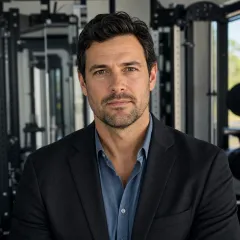
Marcus Feldman
Marcus Feldman is a commercial strength-equipment analyst covering selectorized machines, plate-loaded stations, Smith machines, functional trainers, power racks, benches, barbells, dumbbells, and cable systems. He applies ISO 20957-1 and ISO 20957-2 while comparing rated loads, stability, frame deflection, pulley ratios, cable travel, adjustment increments, guarding, entrapment points, fastener retention, and fatigue cycles. His guides help gym operators, coaches, facility planners, and procurement teams evaluate biomechanics, user capacity, floor layout, maintenance access, durability, and lifecycle value.